
540 Garbage Compactor Safety Poster 5-4-0 Weekly Safety · Week of November 9, 2026. Garbage compactor safety is this week’s toolbox talk for both hard services and soft services crews. Use it in the first 5 minutes of your shift: five minutes of training, for zero accidents.
Download This Week’s Poster (PDF) →
Why garbage compactor safety matters
A garbage compactor makes waste handling easier, and it can also cause a serious injury in a second. The ram, the doors and the hopper do not stop for a hand, a foot or a sleeve.
Safe operation comes down to three habits. Stay alert. Follow the procedure every time. Never take a shortcut. If something does not look or feel safe, stop and ask for help before you go any further.
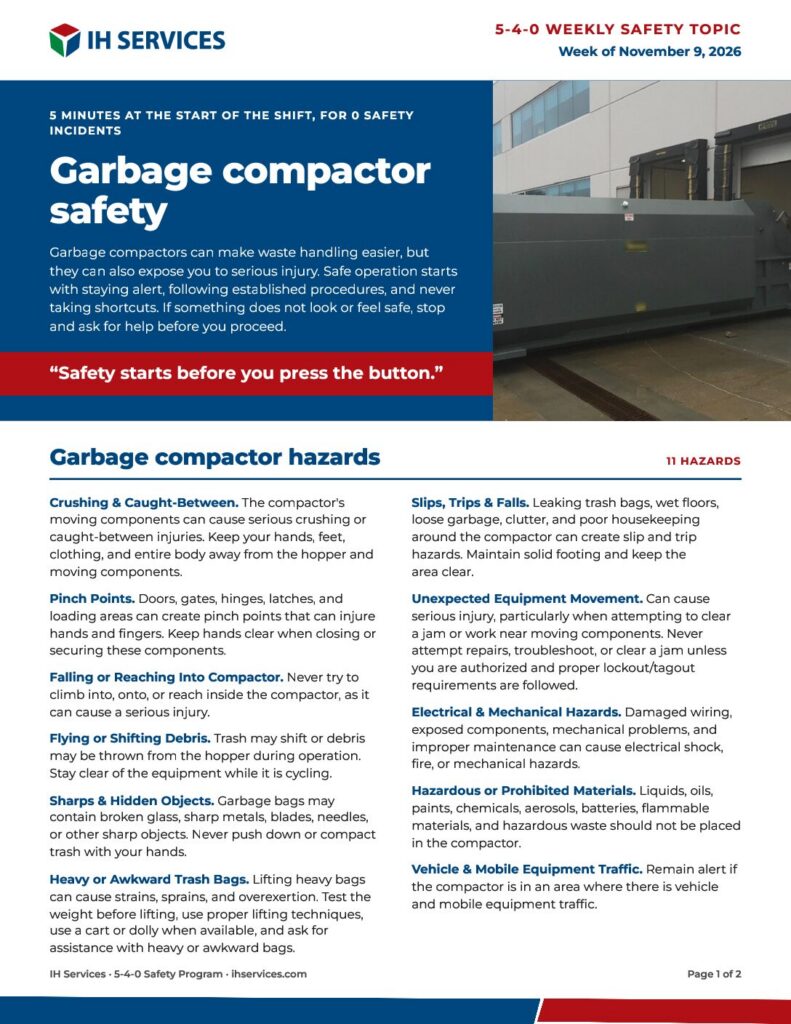
The 11 garbage compactor hazards
- Crushing and caught-between. Keep your hands, feet, clothing and entire body away from the hopper and moving parts.
- Pinch points. Doors, gates, hinges, latches and loading areas can catch hands and fingers. Keep your hands clear when you close or secure them.
- Falling or reaching into the compactor. Never climb into, onto or reach inside the compactor.
- Flying or shifting debris. Trash can shift or be thrown from the hopper during a cycle. Stand clear while the equipment runs.
- Sharps and hidden objects. Bags can hold broken glass, sharp metal, blades or needles. Never push down or compact trash with your hands.
- Heavy or awkward trash bags. Test the weight before you lift, use proper lifting technique, use a cart or dolly when you have one, and ask for help with heavy bags.
- Slips, trips and falls. Leaking bags, wet floors, loose garbage and clutter around the compactor cause falls. Keep the area clear and your footing solid.
- Unexpected equipment movement. Never repair, troubleshoot or clear a jam unless you are authorized and lockout/tagout is in place.
- Electrical and mechanical hazards. Damaged wiring, exposed components and poor maintenance can cause shock, fire or mechanical failure.
- Hazardous or prohibited materials. Liquids, oils, paints, chemicals, aerosols, batteries, flammables and hazardous waste do not go in the compactor.
- Vehicle and mobile equipment traffic. Stay alert when the compactor sits where trucks, forklifts or other equipment move.
Check first: before you use the compactor
- Only trained and authorized employees operate the equipment.
- Look for damaged guards, doors, controls or other obvious problems.
- Make sure doors, gates and safety interlocks are in position before you start a cycle.
- Keep the floor around the compactor clean and dry.
- Wear the PPE your site and task require, such as safety glasses, work gloves and safety footwear.
Every cycle: safe operating practices
- Never put your hands, arms, feet or body inside the compactor.
- Never climb inside or try to retrieve an object while the equipment runs.
- Never bypass, disable, tape down or defeat a safety switch, guard or interlock.
- Use the designated tools for handling waste instead of reaching into a hazardous area.
- Do not overfill the compactor or force oversized material into the opening.
- Keep unauthorized employees away while the equipment operates.
Garbage compactor safety on your shift
Soft services: loading the compactor
- Test every bag’s weight before you lift it, and use a cart or dolly for heavy or awkward loads.
- Watch for glass, metal, needles and blades. Never press a bag down with your hands to make room.
- Keep liquids, chemicals, aerosols and batteries out of the trash stream.
- Clean up leaks and loose trash around the compactor before you leave the area.
Hard services: jams, guards and repairs
- Clear a jam or troubleshoot only if you are authorized, and only with lockout/tagout in place. OSHA’s control of hazardous energy page explains why stored energy must be released and isolated first.
- Report damaged guards, doors, interlocks, wiring or controls as soon as you find them, and tag the unit out of service.
- Never return a compactor to service with a guard missing or an interlock bypassed.
Discussion questions
- Where is the compactor at our site, and who here is trained and authorized to run it?
- If it jams, what is our lockout/tagout rule, and who do we call?
- What do you do if you spot a needle, blade or broken glass in a bag?
Today’s challenge
Before your first load today, walk up to the compactor and run the five “check first” steps. Fix one housekeeping issue around it, report anything damaged, and stop the task if anything looks unsafe.
Key takeaway: Safety starts before you press the button. Check first, keep every part of your body out of the machine, and stop work when something looks wrong.
Catch up on past toolbox talks in the 5-4-0 Weekly Safety archive, or read more on the IH Services Insights page.