
Service: energy and asset performance for defense and aerospace plants
Energy and asset performance: retrofits funded from savings, assets run to last
Two companies in one family, one agreement. Ainsworth Energy audits, funds, and verifies the energy retrofit, so the plant pays nothing up front. IH Services operates the plant and the new systems under R3 Secure FacilityOps, so the savings hold and the assets reach their design life. At a cleared site, both happen inside the access rules your security office sets.
Energy and asset performance is the joint IH Services and Ainsworth Energy offering for defense and aerospace production plants. Ainsworth Energy, a sister company in the GDI family, delivers investment-grade energy audits, funds the retrofit under a performance contract, and measures and verifies the savings. IH Services delivers the operating layer: preventive maintenance, condition monitoring, and a capital roadmap through R3 Secure FacilityOps, with a cleared, self-performing team. Together, they answer the two questions a plant leader asks at once. How do we fund the retrofit without capital? Then, how do we keep the savings after the install?
How the energy and asset performance model works
Most energy projects fail at one of two points. Either the capital approval never comes, or the savings fade because nobody operates the new systems the way the audit assumed. So, the model pairs a funding partner with an operating partner from the start.
Investment-grade energy audit
Ainsworth Energy audits the plant to an ASHRAE Level III standard. That covers utility history, metered end uses, the measures worth doing, their cost, their expected savings, and the measurement plan that will prove them.
Measures and financing
The measures become a project. Ainsworth Energy funds the capital and structures a performance contract, so the plant pays nothing up front. Then, the savings the measures produce repay the project, measured against the baseline, over an agreed term.
Installation around production
Then, the team schedules the work around the production calendar and, at a cleared site, inside the access rules the security office sets. IH Services coordinates it as part of the facility operation rather than as a separate contractor.
Operate and verify performance
IH Services runs the new systems under R3 Secure FacilityOps, with preventive schedules loaded on day one. Ainsworth Energy measures and verifies the savings each period under the contract’s protocol, and the report goes to your finance team.
Capture the remaining energy savings
Finally, when the term ends, the measures keep saving and the plant keeps all of it. The capital roadmap IH Services maintains then shows which assets come next.
Energy performance: funding retrofits without capital expenditure
A performance contract moves the retrofit from the capital plan to the operating budget. The energy partner funds the measures and recovers its cost from the savings they produce. The savings are measured against an agreed baseline over an agreed term. After the term, the plant keeps all of them. The federal government has bought this way for decades through Energy Savings Performance Contracts, and the structure translates directly to a defense prime or supplier site.
For a capex-constrained plant, that changes the conversation. Instead of competing with production equipment for capital, the retrofit becomes an operating decision with a measured payback. Moreover, because Ainsworth Energy carries the capital and the savings risk, finance sees a contract rather than a forecast.
In short, the plant gets the measures now, pays from savings, and owns the result.
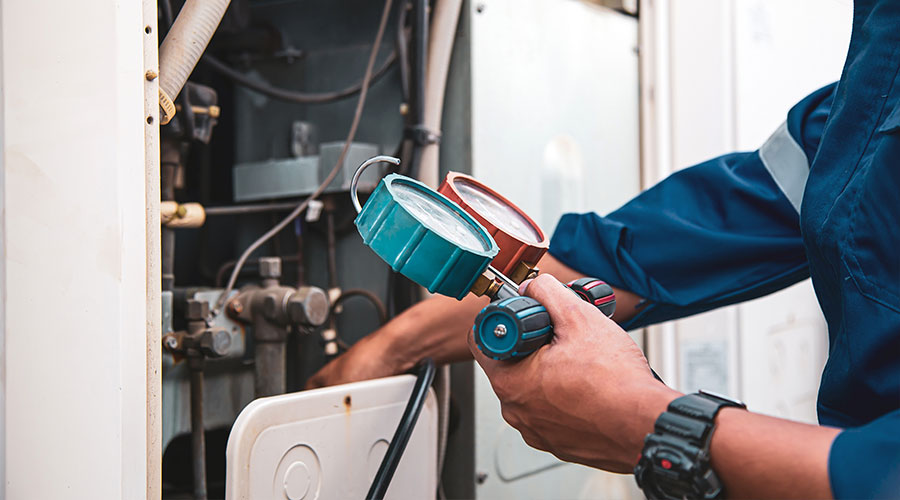
Energy and asset performance starts with an investment-grade audit
An audit is only as useful as the decisions it supports. So, the model uses the investment-grade standard, ASHRAE Level III, rather than a walk-through. Specifically, the audit of a defense manufacturing plant covers three things.
Where the plant’s energy goes
First, utility history and metered end uses: process loads, compressed air, HVAC, lighting, and building systems. That way, the measures target the largest loads rather than the most visible ones.
Which energy measures pay
Then, each candidate measure with its cost, expected savings, and interaction with production. Measures run from controls and scheduling to motor, drive, and equipment replacement.
How the energy savings get proved
Finally, the measurement and verification plan. It sets the baseline, the metering, the adjustments for weather and production, and the reporting period finance will see.
At a cleared site, the audit team needs access like any other visitor. Consequently, IH Services coordinates the audit through its Facility Security Officer and your security office. That keeps the project from adding a new stream of uncleared visits.
Asset performance: how O&M keeps the savings and extends asset life
A retrofit delivers its design savings only if the equipment runs the way the design assumed. After all, a new chiller with fouled coils loses the savings quietly. So does a variable-speed drive left in manual, or a control sequence someone overrode during a hot week. That is why the operating layer matters as much as the capital.
IH Services loads every new asset into R3 Secure FacilityOps with its preventive schedule on day one. Likewise, condition monitoring catches drift before it becomes failure, and every task leaves a work-order record. Over time, those records become the capital roadmap: which assets are aging, which are in condition, and which replacements the next performance contract should fund. IH Services holds the site to a 98 percent preventive compliance standard once it reaches steady state. Also, 99 percent on-time work-order completion is the daily measure.
In other words, the same discipline that keeps the savings in place is the discipline that lets equipment reach its design life. The two outcomes are one practice.
Energy and asset performance for Scope 2 targets
Many defense primes and their suppliers now publish greenhouse-gas targets. Scope 2, the emissions from purchased electricity, steam, heat, and cooling, is where a production facility has the most direct control. The GHG Protocol Scope 2 Guidance sets the counting rules. The plant’s job is to reduce the load.
So, the sequence is efficiency first: controls and scheduling, motors and drives, compressed-air leak programs, lighting, and HVAC optimization. The performance contract audits, funds, and verifies each one. Then, where the site and its security rules allow, on-site generation or procurement choices address what remains. Because Ainsworth Energy measures and verifies the savings each period, the Scope 2 reduction is a reported figure rather than an estimate. In turn, that is what a corporate sustainability team needs to carry it into the company’s disclosure.
Scope note: the energy and asset performance model covers building and facility systems: HVAC, lighting, compressed air that serves the building, controls, envelope, and the utility plant. Production equipment and process loads inside the yellow line stay with your engineering team. However, the audit will show their share of the bill.
Energy and asset performance questions plant leaders ask
How do manufacturers fund energy retrofits without capital expenditure?
Through a performance contract. An energy services partner audits the plant, funds and installs the measures, and recovers its cost from the measured savings over an agreed term. So, the retrofit sits in the operating budget rather than the capital plan. The federal government buys this way through Energy Savings Performance Contracts, and the same structure works for a defense prime or supplier. In the IH Services model, Ainsworth Energy structures and funds the project and IH Services operates the plant, under one coordinated agreement.
What does an energy audit of a defense manufacturing plant cover?
An investment-grade audit, ASHRAE Level III, covers four things. First, the utility history and the metered breakdown of where energy goes: process loads, compressed air, HVAC, lighting, and building systems. Second, the specific measures worth doing, from controls and scheduling to equipment replacement, with cost and expected savings for each. Third, the interaction with production: what the team may touch, when, and under what access rules at a cleared site. Fourth, the measurement and verification plan that will prove the savings afterward. Also, at a defense plant, the audit team itself needs the access the site requires, which is why IH Services coordinates it.
How does facility O&M extend asset life?
By keeping equipment in its design condition. Preventive maintenance on schedule (filters, coils, belts, bearings, lubrication, controls calibration) keeps motors, chillers, boilers, and air handlers within their design loads. Also, condition monitoring catches drift before it becomes failure. Likewise, a work-order record for every task gives a capital planner real evidence of each asset’s condition. As a result, the planner schedules replacement instead of reacting to failure. IH Services holds steady-state sites to a 98 percent preventive compliance standard for that reason.
How do manufacturers reduce Scope 2 emissions at production facilities?
Scope 2 emissions come from purchased electricity, steam, heat, and cooling, so the lever is the load. In practice, that means efficiency measures first: controls, motors and drives, compressed-air leak programs, lighting, and HVAC scheduling. Then, on-site generation or procurement choices follow where the site allows. The GHG Protocol’s Scope 2 guidance sets how the reduction is counted. In the IH Services model, the measures are audited, funded, and verified by Ainsworth Energy, and the day-to-day operating discipline that keeps the savings in place is IH Services’ job.
Does the energy and asset performance model work at a cleared site?
Yes, and that is the point of pairing the two companies. Energy work at a cleared site has the same access problem as any other vendor visit. Audit teams, installers, and commissioning engineers need approval or escorts. So, IH Services’ cleared, self-performing team coordinates that access through its Facility Security Officer with your security office. Afterward, it operates the installed systems, so the project does not add a new stream of uncleared visitors.
What performance proof does IH Services publish?
99 percent on-time work-order completion, 98 percent client retention, and 100 percent of client-defined reduction targets met across the services it self-performs. Also, a New York defense and aerospace client renewed for seven years in March 2026. Energy project references come through Ainsworth Energy under NDA on request.
Which plant has the oldest utility plant and the tightest capital budget?
Start there. A 20-minute call with IH Services and Ainsworth Energy is enough to scope an investment-grade audit and say whether a performance contract fits.