
Is the Audit the Threat, or the Mirror?
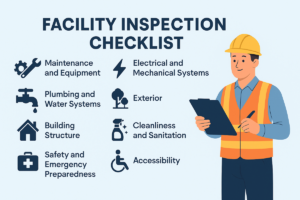
Audits do not create operational risk. Instead, they expose it, which is why audit-ready facility services matter so much.
In secure facilities, the review may come from internal governance, a customer, or a regulator. Either way, the audit works as a stress test. First, it measures the distance between policy and practice. Then it shows whether your records match reality. Finally, it tests whether daily work holds up under scrutiny.
Some facilities treat audit readiness as paperwork, so they prepare documents. Others treat it as an operating discipline, so they prepare systems.
That difference decides whether audits disrupt operations or build credibility.
What Audit-Ready Facility Services Truly Mean in Secure Environments
Audit readiness is not a shelf of binders or a set of digital folders. Instead, it means field work matches the written process every day, not just at review time.
In secure facility operations, audit readiness requires:
- Work orders that are traceable from initiation through closure
- Preventive maintenance documentation that demonstrates compliance, not intent
- Standard operating procedures applied consistently across technicians and sites
- Escalation records that show accountability, not ambiguity
When documentation must be assembled manually during review cycles, readiness is reactive. Secure facilities cannot afford reactive compliance. For cleared contractors, it isn’t optional either: 32 CFR 117.7 requires a formal self-inspection at least once a year, with a written report kept for the government’s next security review.
Why Fragmented Service Models Struggle Under Audit Pressure
Many facilities rely on multiple vendors, each responsible for a trade or scope. On the surface, this appears manageable. During audit review, however, fragmentation reveals its weakness.
For example, documentation standards differ. Training records also vary in format. Meanwhile, corrective action logs may not align. One vendor’s preventive schedule may not match another’s inspection cycle.
The result is not always non-compliance. Rather, it is inconsistency. In regulated environments, inconsistency is risk.
Audits expose seams between vendors. Those seams are rarely visible in daily operations—but they surface under scrutiny. We cover the data behind this in why fragmented facility vendors increase risk.
Building Audit-Ready Facility Services Into Daily Operations
You build audit-ready facility services into daily work. That takes structural integration rather than a scramble before each review.
An audit-defensible model includes:
Unified Governance
First, all services run under a single operating framework. As a result, you get:
- Standardized reporting formats
- Consistent documentation expectations
- Centralized performance visibility
That’s the core of integrated operations and maintenance.
Measured Performance
Next, you have to measure reliability and responsiveness. So track:
- On-time completion metrics
- Preventive maintenance compliance rates
- Response-time adherence
Metrics provide evidence, not opinion.
Embedded Compliance Discipline
Finally, compliance has to live inside the daily workflow. That includes:
- Routine SOP validation
- Documented training cycles
- Recorded root cause analysis for recurring issues
- Structured corrective action closure
When compliance is embedded, audits confirm strength rather than expose weakness. At IH Services, our cleared maintenance and custodial crews work under a security program overseen by our Facility Security Officer, Racheal Prutch.
Executive Impact
For procurement officers, operations directors, and compliance leaders, audit readiness reduces three major exposures:
- Contract vulnerability
- Reputational damage
- Operational disruption
Secure facilities operate under intense oversight. So the goal is not to avoid audits. Instead, the goal is to make them uneventful.
A 30-Day Plan to Get Audit-Ready
You don’t need to wait for the next review to find your gaps. Instead, run your own check over the next 30 days.
- Week 1: Sample the records. Pull ten closed work orders from last quarter. Check each one for a timestamp, a technician name, and proof the work was finished.
- Week 2: Check the people. Match your access list against current staff and vendor rosters. Then confirm training records for everyone who works in restricted areas.
- Week 3: Close the loops. List every open corrective action, and give each one an owner and a date.
- Week 4: Fix the process, not just the paperwork. For every gap you found, change the step that let it happen, so it doesn’t come back.
After 30 days, you’ll know exactly where you stand. More importantly, your next audit becomes a confirmation rather than a surprise.
Audit-Ready Facility Services Make Compliance Predictable
In secure environments, the strongest audit outcome is silence.
No scrambling, no justification, and no unexpected findings. Audit-ready facility services eliminate surprises by aligning execution with documentation every day—not just before review cycles. Schedule a Facility Compliance Readiness Scan to identify documentation and execution gaps before your next audit window.
Questions Buyers Ask About Audit-Ready Facility Services
What are audit-ready facility services?
Audit-ready facility services keep records and field work aligned every day, not just before a review. Work orders are traceable from request to closeout, preventive maintenance is documented as done, procedures are applied the same way across crews, and corrective actions are closed with evidence.
Why do multiple facility vendors create audit problems?
Each vendor keeps records its own way. Training logs, preventive schedules, and corrective actions don’t line up, and nobody owns the gaps between them. The work may have been done, but inconsistent records read as weakness to an auditor.
How do I prepare facility operations for an audit?
Start with a sample. Pull ten closed work orders and check each for timestamps, technician names, and closeout evidence. Review training records for every crew member with access. Close open corrective actions. If the sample has gaps, the full population does too.
How do I document vendor access to controlled areas for a DCSA review?
Keep one record that ties every vendor entry to a person, a date, a time, a space, and a reason. That means a current roster of vendor staff approved for access, sign-in and sign-out logs or badge records for each controlled area, escort records where an escort was used, and the work order that explains why the person was there. Your FSO should be able to pull those records for any date without calling the vendor. So, write that format into the contract, not after the review is announced.